Designing Your Signature: The Timeless Appeal of Wedding Monogram
There is a specific moment during the planning of any significant event, be it a wedding, a brand launch, or a curated collection, where the visual identity needs to stop looking like a draft and start looking like a legacy. You have the colors picked out, you know the vibe you are going for, but the text on your invitations or the logo on your packaging feels disjointed. This is where the art of the monogram comes into play. It is not just about slapping initials together; it is about creating a cohesive symbol that represents unity and style. For designers and small business owners alike, having a versatile and elegant asset in your toolkit—specifically a high-quality Wedding Monogram design—can bridge the gap between amateur projects and professional, polished visual communication.
Beyond the Invitations: Versatility in Modern Design
When we hear "Wedding Monogram," our minds often jump immediately to invitations or save-the-date cards. While that is certainly a primary use case, limiting this design style to paper goods is a missed opportunity for entrepreneurs and content creators. The true value of a robust monogram design lies in its adaptability across various mediums. Imagine a boutique bakery using the monogram not just on their website, but embossed on their packaging boxes, printed on staff aprons, and used as a watermark on their social media photography.
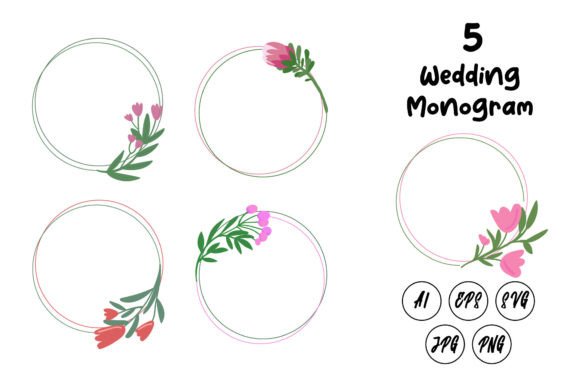
Because the design is delivered in a comprehensive suite of formats—AI, SVG, Transparent PNG, JPG, and EPS—you are equipped for almost any production scenario. The SVG and EPS files are particularly vital for scaling. Whether you are printing a massive backdrop for a photo booth or shrinking the design down for a favicon on a browser tab, vector formats ensure the lines remain crisp and the curves smooth. The 1920px x 1280px canvas size in the raster formats (PNG and JPG) offers a substantial starting point for digital assets, providing enough resolution for high-definition screens and standard print materials without needing to immediately upscale.
From Screen to Stitch: Merchandise and Physical Goods
For the creative entrepreneur looking to monetize their designs or brand their physical products, the Wedding Monogram offers a distinct advantage. The transition from a digital file to a physical object is often where designs fall apart. A complex, overly detailed font might look great on a computer monitor but turn into a blob of ink on a tote bag or fail to cut cleanly on a sticker plotter.
A well-structured monogram, however, is designed with physical application in mind. Think about the texture of a cotton shirt or the glossy surface of a poster. The negative space within the monogram allows the design to breathe, ensuring legibility even when printed on textured fabrics or rough paper stocks. If you are running a Print-on-Demand business, utilizing this design for T-shirts, tote bags, and stickers can create a cohesive "bridal party" or "event merch" collection that feels curated rather than generic. The transparent PNG file is your best friend here, allowing you to overlay the monogram onto mockups instantly without worrying about masking out white backgrounds.
The Psychology of the Intertwined Initial
Why do monograms work so well for branding? It comes down to the psychology of ownership and connection. When two letters are intertwined or styled to complement one another, it signals a relationship. For a wedding, this represents the union of two people. For a business, it can represent the marriage of two ideas, the founder's initials, or the connection between the brand and its customer.
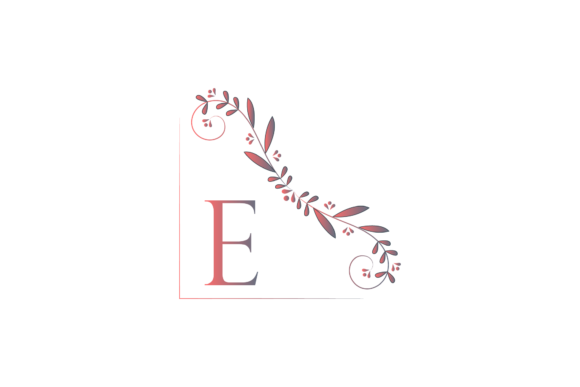
In terms of modern typography, monograms sit in a unique space. They are functional, serving as a logo or identifier, but they are also deeply decorative. They allow for a level of ornamentation that standard sans-serif logos might shy away from. This design style often leverages the contrast between thick and thin strokes, a hallmark of premium display fonts. This contrast draws the eye and creates a sense of rhythm. When you incorporate such a design into your marketing assets, you aren't just adding a pretty picture; you are utilizing a visual anchor that commands attention and suggests a higher level of care and quality in your presentation.
Integrating the Monogram into Your Visual Ecosystem
One of the challenges in branding is maintaining visual consistency across different platforms. A logo that looks great on a white business card might disappear against a busy background on Instagram. A monogram design solves this by being a contained shape. It acts as a seal. This makes it incredibly useful for social media graphics where you need to stamp your content without obscuring the image itself.
Consider the workflow of a content creator or a small business owner managing their own marketing. You likely don't have time to create custom graphics from scratch for every single post. Having a go-to monogram file allows you to quickly brand your images, stories, and reels. It reinforces your identity without being overbearing. Furthermore, because the design is provided in multiple vector formats (AI and EPS), it is fully editable in software like Adobe Illustrator. You can change the fill colors to match seasonal palettes—perhaps a deep burgundy for autumn or a soft sage for spring—ensuring the monogram fits the mood of the specific campaign you are running.
Practical Application: Technical Considerations for Designers
If you are a designer or a hobbyist taking on a client project, the technical specifications of your assets matter as much as the aesthetic. The inclusion of the AI file is a massive time-saver. It allows for direct manipulation of anchor points and layers, which is essential if you need to adjust the kerning (spacing) between the letters to fit a specific layout or if you want to separate the elements to animate them for a video intro.
When working with print shops, the EPS format is often the industry standard for vector compatibility. It ensures that whether the printer is using CorelDRAW, Adobe Illustrator, or other proprietary software, the file will open correctly and maintain its scalability. For the web designer, the SVG (Scalable Vector Graphic) format is crucial for site performance. Unlike heavy JPGs, SVGs are code-based, meaning they load faster and look sharp on Retina displays. By having access to the Wedding Monogram in these various formats, you are essentially future-proofing the asset for any project requirement, from a quick social media post to a large-format exhibition print.
Matching Typography and Style
While the monogram itself serves as a graphic element, it rarely stands alone in a design. It is usually accompanied by text—names, dates, taglines, or body copy. Choosing the right complementary typography is where the magic of design really happens. Because monograms are often intricate and detailed, they pair best with cleaner, more legible typefaces.
If the monogram leans towards a classic, serif-heavy style with swashes and flourishes, consider pairing it with a modern sans-serif for the body text. This creates a hierarchy that guides the viewer's eye: the monogram captures the mood, and the sans-serif delivers the information clearly. Conversely, if the monogram is minimalist and geometric, a handwritten or script font can add a touch of warmth and personality to the supporting text. The key is contrast. You want the monogram to be the star, and the accompanying typography to be the supporting cast. Testing these pairings on different backgrounds—light mode vs. dark mode—is a practical step often overlooked, but it ensures your brand identity remains versatile.
Commercial Licensing and Brand Ownership
For those using this design for commercial purposes—whether it’s selling merchandise, creating client work, or building a brand—understanding the value of the asset is key. A premium design is not just about the visual; it is about the rights and the utility you gain. When you incorporate a high-quality monogram into your brand identity, you are investing in a visual shorthand that communicates professionalism instantly.
It allows small businesses to compete visually with larger, established brands. A cohesive monogram on packaging, a website header, and a business card signals to the customer that this business is legitimate, established, and detail-oriented. It turns a simple transaction into a brand experience. Whether you are a wedding planner looking to standardize your stationery kits, or a digital creator wanting to sell customizable templates, having a reliable, multi-format monogram design streamlines your production process and elevates the final product. It is the difference between looking like you are starting out and looking like you have arrived.